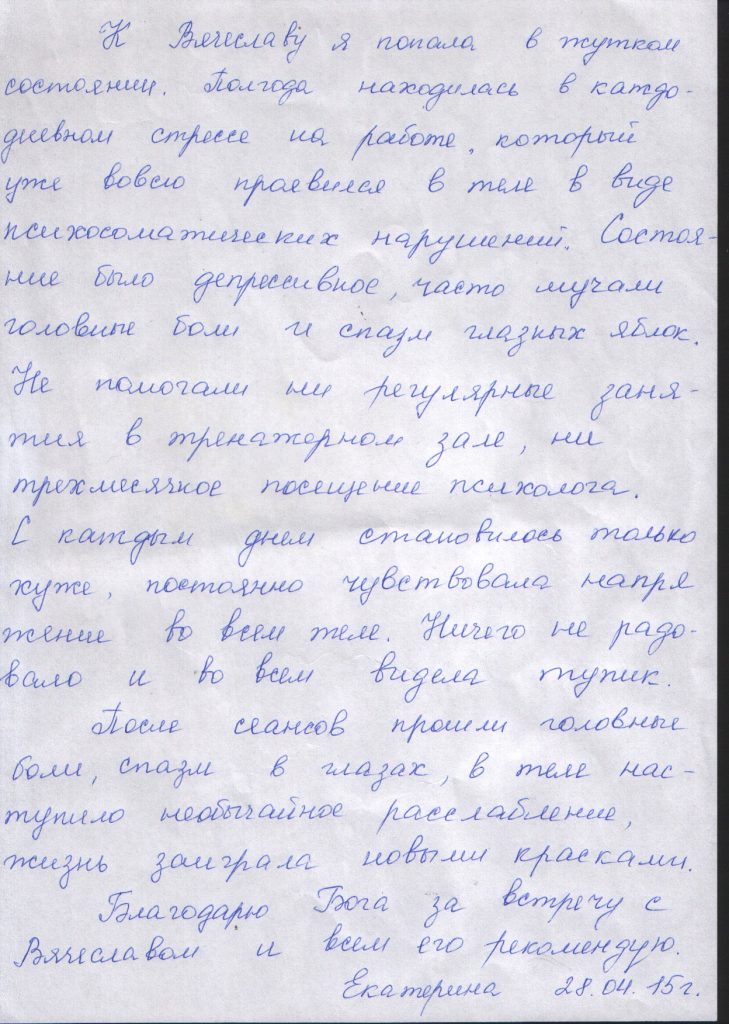
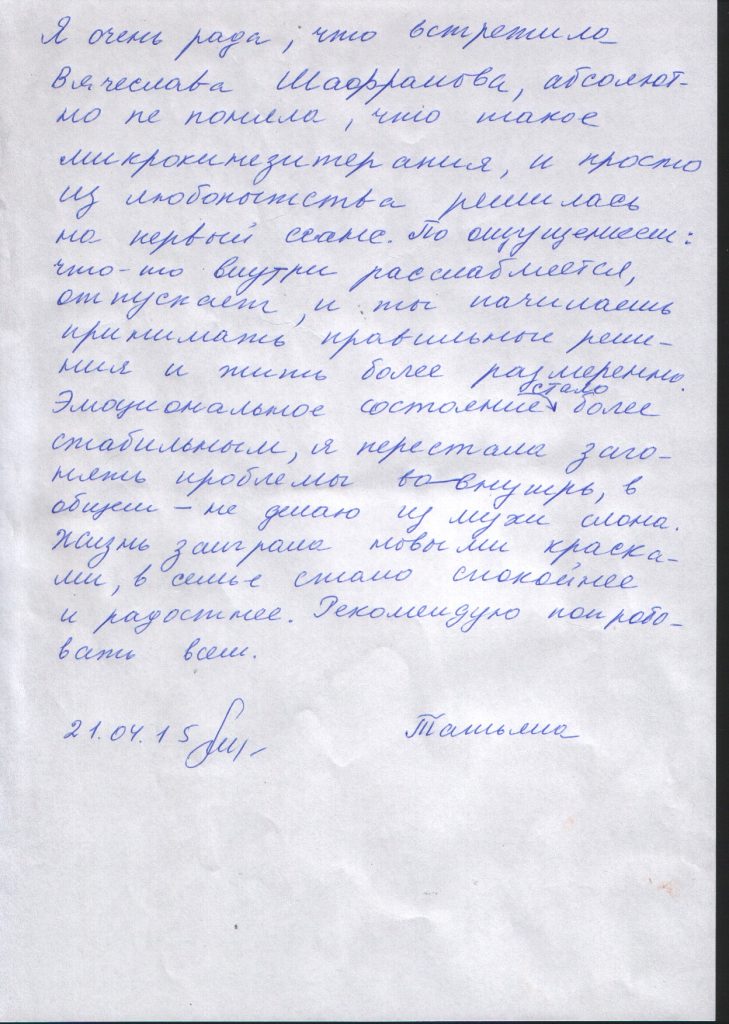
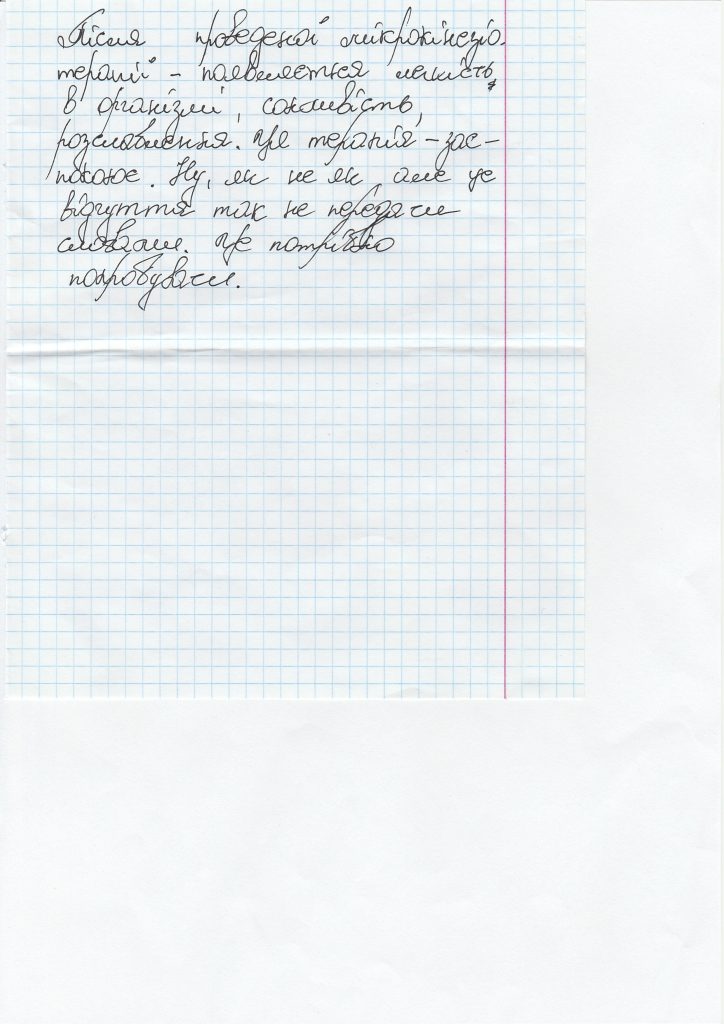
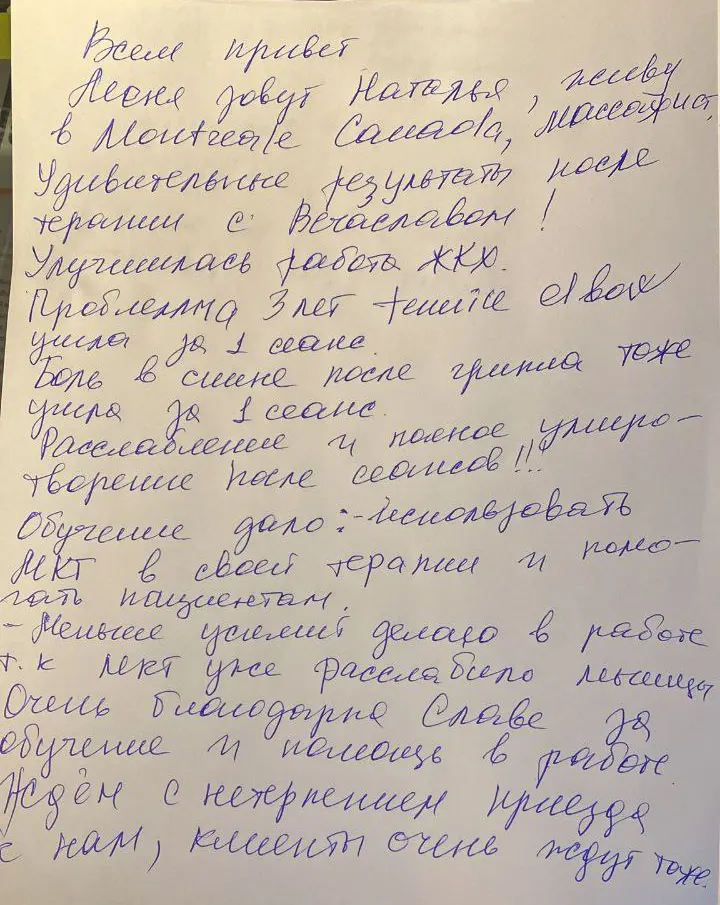
In today’s world, where stress, trauma and chronic diseases are becoming part of everyday life, your health requires special attention. Our private microkinesitherapy sessions are not just therapy sessions, but deep work with the root causes of your problems, restoring harmony to your body and soul.
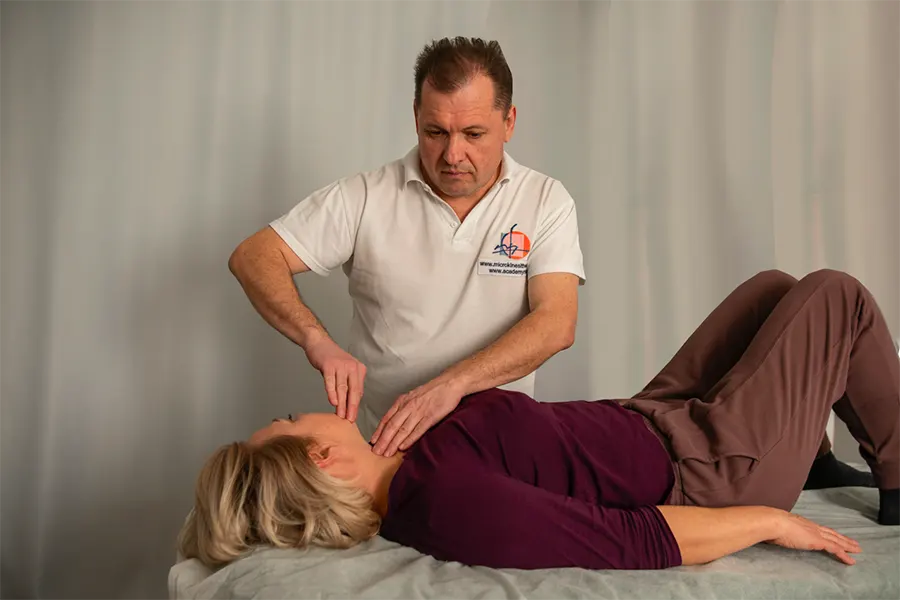
Microkinesitherapy is a unique method that allows us to identify and eliminate the ‘traces’ of physical, emotional and psychosomatic disorders in tissues. Unlike standard approaches, we do not simply remove the symptoms, but work with the underlying causes so that your body can heal itself.
What you will receive at a private appointment:
Individual diagnosis: Using micro-palpation, we identify hidden dysfunctions that affect your health.
Personalised therapy: Each session is tailored to your unique needs, taking into account physical, emotional and even hereditary factors.
Rapid recovery: The method activates natural self-healing mechanisms, helping you return to an active life faster.
Holistic approach: We work with the body as a single system, integrating knowledge from embryology, neurophysiology and biomechanics.
Our sessions are suitable for those who want to get rid of chronic pain or the effects of injuries, as well as for those who want to improve their overall health.
We help:
Microkinesitherapy is a gentle, non-medicinal method that is safe for people of all ages, from newborns to the elderly. In more than 40 years of clinical practice in France and other countries in Europe and around the world, no serious side effects have been reported. The method does not interfere with the body’s natural processes, but only helps it to restore its internal balance and activate its own self-regulation mechanisms.
Sometimes after a session, a natural recovery reaction is possible: slight fatigue, drowsiness, a temporary exacerbation of old sensations, or emotional release. These manifestations are considered a normal part of the process — the body completes the regeneration processes it has begun.
We also strictly define the indications and contraindications for therapy.
Microkinesitherapy does not replace medical diagnosis, but effectively complements traditional approaches, helping to restore the harmony of the body and mind in a natural way.
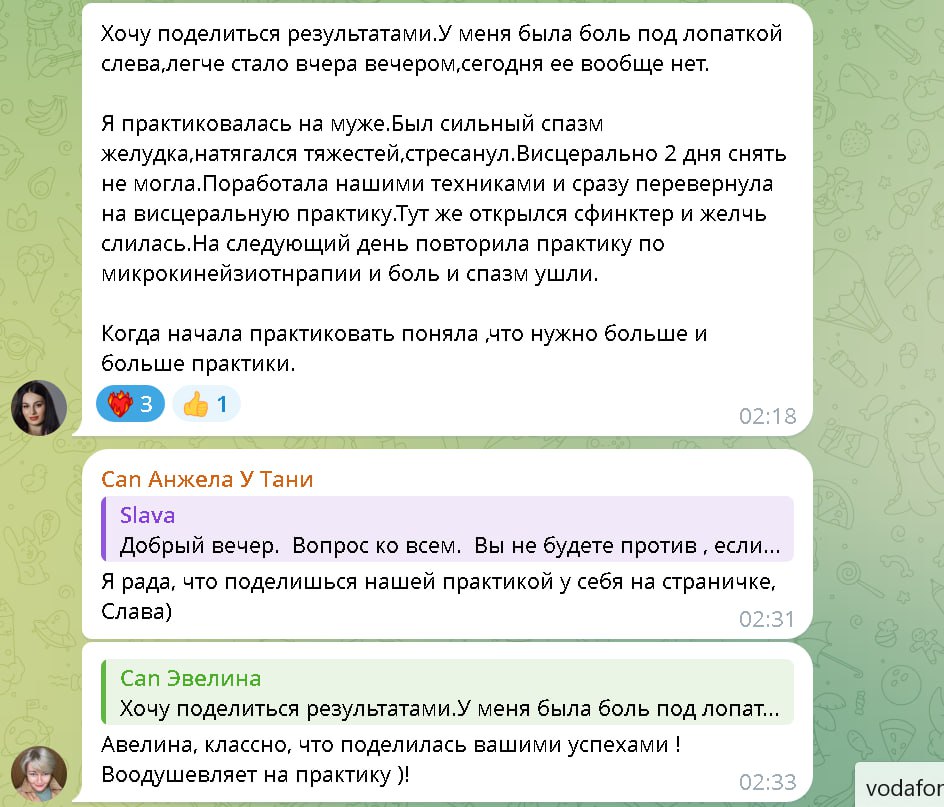
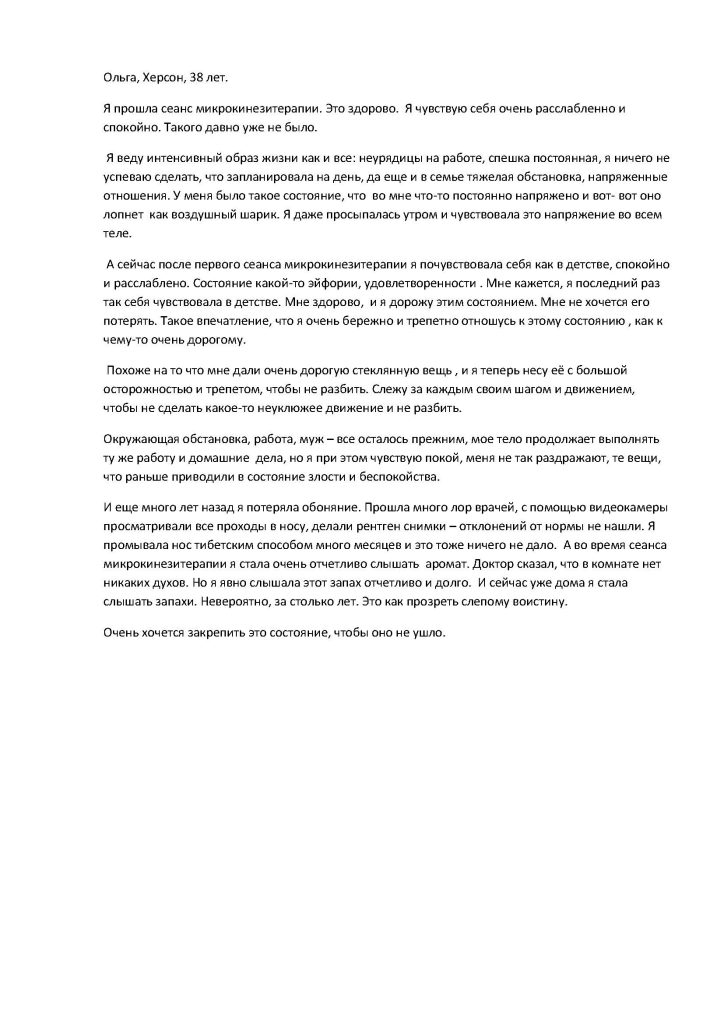
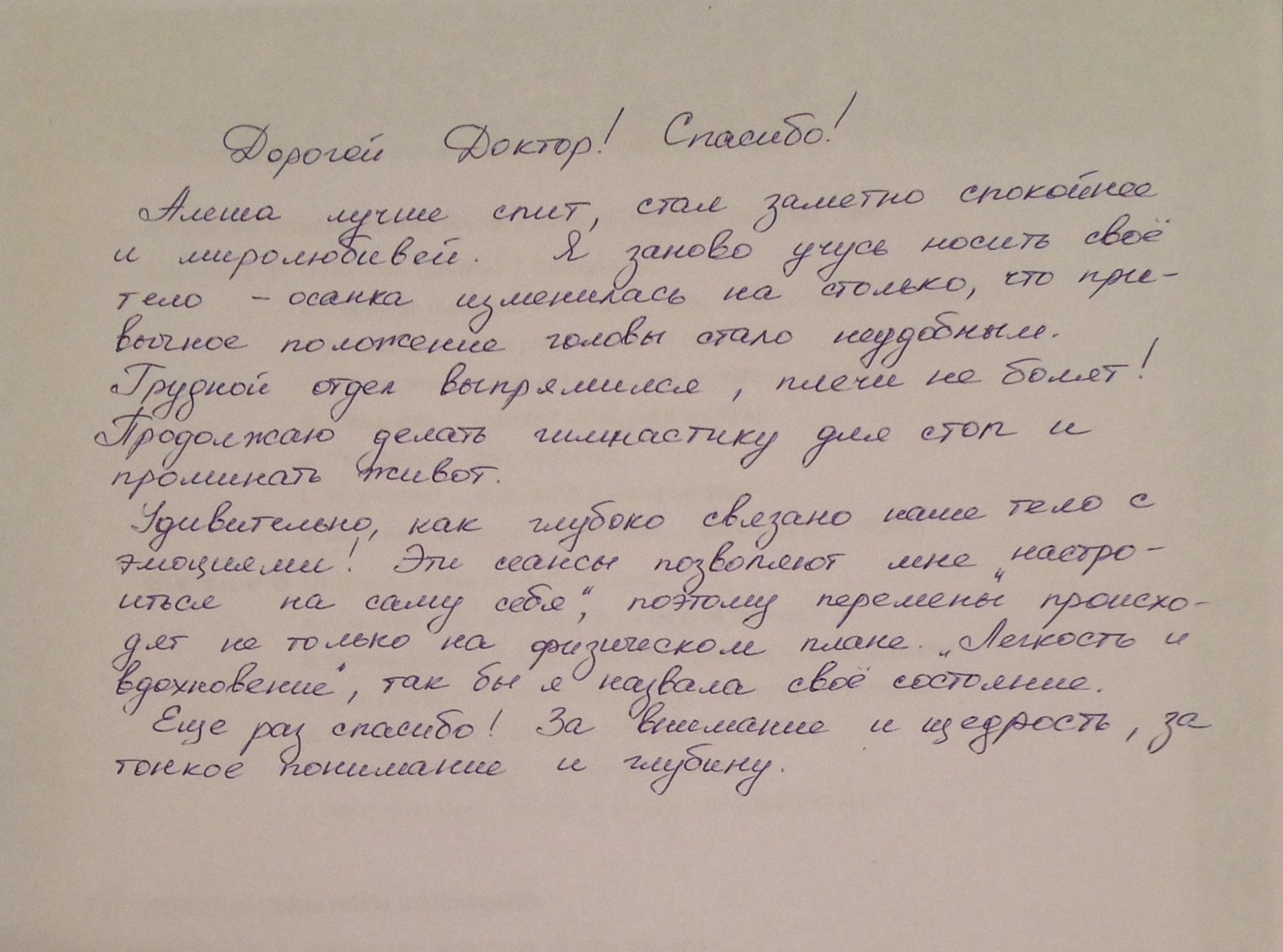
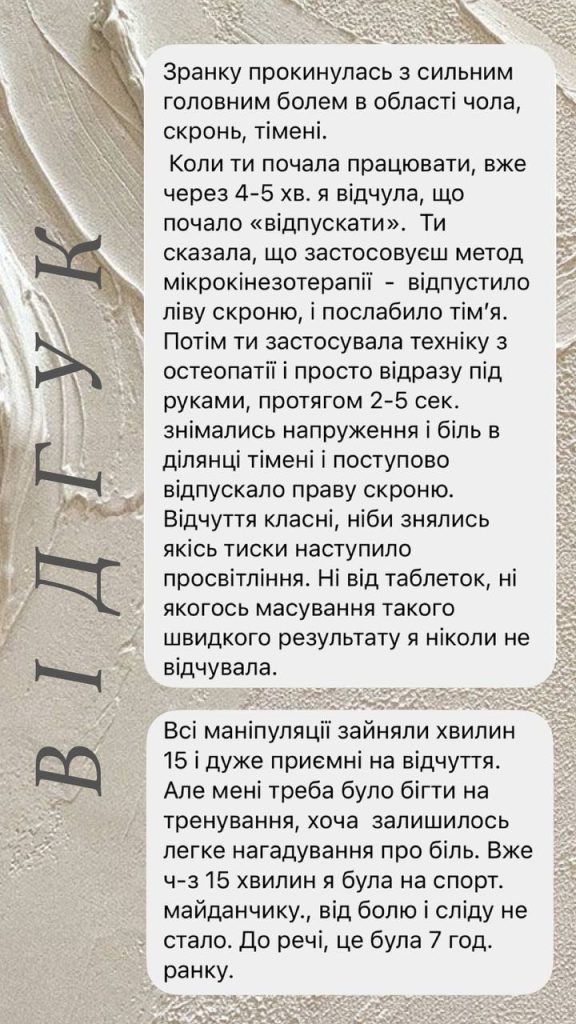
In most cases, relief is felt immediately — internal tension disappears, and a sense of lightness and calmness appears.
Sometimes the result manifests gradually, over several days, as the body completes its internal ‘work.’
The course is selected individually:
sometimes one session is enough, sometimes several, with an interval of 1-2 weeks.
Each session works with different requests and starts a new stage of recovery, and the changes continue even after the session is over.
The session takes place in a calm environment, and the patient remains fully clothed.
The therapist uses gentle micro-touches to examine the body, as if ‘reading’ information.
These touches are so light that the person often feels only warmth, relaxation, or internal waves of movement.
The body itself chooses what it needs to correct.
The therapist only finds and activates areas where regulation is disturbed, and the body continues the process on its own.
A session usually lasts 45–60 minutes. Afterwards, you may feel slightly tired or sleepy — this is a natural reaction to the start of self-healing.
The method is suitable for people of all ages, from newborns to the elderly.
It is especially effective when conventional approaches do not produce lasting results and the body is ‘stuck’ in chronic tension.
Microkinesitherapy helps with:
It can also be used preventively to maintain the body’s resistance to stress and fatigue.
For athletes and active people, it is a way to speed up recovery, and for office workers, it is a way to relieve accumulated tension and regain concentration.
Microkinesitherapy is a method of restoring the body’s innate ability to self-correct through micro-palpation of tissues and searching for traces of old disorders (microtraumas).
It does not treat the symptom, but searches for the root cause recorded in the tissue memory and triggers a self-regeneration reaction.
1. From massage
Massage affects muscle tone, blood and lymph flow, improving metabolism and relaxing the body.
Microkinesitherapy works not with ‘muscles’ but with information recorded in tissues. Touch does not knead but ‘respects’ — it is like deciphering an internal archive.
If massage ‘improves circulation,’ microkinesitherapy restores the original regulatory program code.
2. From osteopathy
An osteopath looks for structural or functional dysfunctions and corrects them mechanically through mobilisation.
A microkinesitherapist looks for historical disturbances — old microtraumas, stress, toxins, infections, emotional traces — and gives the body an impulse to erase them.
An osteopath corrects the structure, while a microkinesitherapist corrects the functional memory of the tissue.
3. From biodecoding and psychotherapy
Biodecoding works through awareness of emotional conflicts.
Microkinesitherapy does the same thing — but physically, without the need for awareness.
The body itself remembers where the conflict was and completes the reaction.
That is, psychotherapy works through words, microkinesitherapy — through sensations.
4. From energy and bioenergy-information practices
Energy methods act from the outside — harmonising the field, meridians, and chakras.
Microkinesitherapy works from within, through the physiological reaction of cells, activating the natural correction mechanism.
If bioenergetics ‘adds energy,’ microkinesitherapy restores the internal harmony of systems.
5. In applied kinesiology, the therapist tests and intervenes, while in microkinesiotherapy, the body itself remembers and corrects.
There are no ‘yes-no’ tests here; everything happens through the perception of micro-movements and tissue response.
6. Unlike classical kinesiology (neurokinesiology, energy kinesiology), kinesiology uses movement to activate the brain, while microkinesiotherapy uses micro-movements of tissue to activate the body.
If kinesiology ‘teaches the body to coordinate itself again,’ then microkinesiotherapy ‘helps the body remember how it was before the disorder.’
The method is based on three fundamental principles:
Embryological map of the body. Each tissue has its own origin and memory. Through it, one can ‘reach’ the source of the disorder.
The physiological principle of self-correction. The body is capable of healing itself if the information block is removed.
Palpation as both a test and a correction. The therapist does not ‘do’ anything, but rather activates the internal healing process.
After the session, the body does not simply relax — the internal regulatory scenario changes, and the symptom ceases to be necessary.
This is why the effect may be delayed: the body ‘finishes’ the work itself.
Microkinesitherapy is not just a therapy, but a path to a deep understanding of your body.
The method allows you to:
Microkinesitherapy is not just a method of recovery, but a subtle way of working with the body, energy and history of a person.
For those who live in a constant rhythm of responsibility, manage teams, make decisions and rarely allow themselves to stop, this is a way to return to their inner centre.
VIP sessions are held in a private atmosphere, with individual selection of duration, rhythm and depth of work.
This is not a superficial effect, but a deep immersion into a state of inner silence, where the body, psyche and energy are reunited in a single rhythm.
Each meeting is structured as a personal journey to a state of clarity, lightness and inner balance, where the body and mind are once again in unison.
Ready to take the first step towards recovery? Book a private appointment today!
Microkinesitherapy is not just a session—it’s an investment in your health and well-being. Let us help you restore harmony to your body and soul.
Book a private session and feel the difference after just one visit!
Objective:
Mastering the latest methods of manual support for vital body functions, developed by the methodology’s author, Daniel Grosjean.
Program:
Physiology and Biology:
Issues of ontogenesis: individual development of the organism and its disorders.
Fundamental mechanisms of adaptation, compensation, and elimination (suppression of dysfunctions).
Practical Skills:
Micropalpation to identify disruptions in fundamental functions.
Manual support techniques for restoring vital processes.
Stimulation of adaptation and elimination mechanisms.
Identification of priority dysfunctions and correction algorithms.
Result:
Ability to support vital body functions in severe chronic pathologies using the latest microkinesitherapy approaches.
Objective:
Study of extra-embryonic processes and the interaction of the organism with its environment.
Program:
Physiology and Biology:
Development of the organism at the extra-embryonic level (micro- and macromeres).
Holobiotic programs: interaction of the organism with its own biota (microflora).
Interaction of the organism with mineral substances.
Negentropic and entropic development.
Fundamental, dynamic, and immanent programs of the organism.
Practical Skills:
Micropalpation for diagnosing dysfunctions related to extra-embryonic development.
Correction of disorders caused by imbalances in holobiotic processes.
Identification of priority dysfunctions and correction algorithms.
Result:
Skills in working with extra-embryonic processes and restoring balance between the organism and its biota.
Objective:
Mastering methods for diagnosing and correcting congenital, acquired, and induced lesions at the tissue and cellular levels.
Program:
Etiology and Pathology:
Congenital, acquired, and induced lesions of tissues and cells.
Endemic level: genetic programs and reactions misaligned with the environment.
Xenotic etiologies: impact of endocrine disruptors unrecognized by the body.
Physiology:
Fundamental mechanisms of adaptation and compensation in the body.
Practical Skills:
Micropalpation to identify “traces” of lesions at the tissue and intracellular levels.
Correction techniques to restore adaptive processes.
Identification of priority dysfunctions and algorithms for selecting the sequence of corrections.
Result:
Ability to diagnose and correct complex lesions related to genetic and external factors, enhancing the body’s adaptive capabilities.
Objective:
Mastering methods for working with fundamental mechanisms of self-regulation and body protection.
Program:
Physiology and Biology:
Negentropy and entropy: their impact on self-regulation and functional restoration.
Primary etiologies and specific protective mechanisms of the body.
Fundamental protective programs (immune and behavioral).
Advanced self-regulation mechanisms for restoring natural balance.
Practical Skills:
Micropalpation to identify primary etiologies and their traces in tissues.
Correction of dysfunctions related to impaired protective mechanisms.
Stimulation of natural self-regulation and regeneration processes.
Identification of priority dysfunctions and correction algorithms.
Result:
Ability to work with fundamental protective mechanisms and stimulate natural body restoration in chronic and complex pathologies.
Objective:
In-depth study of psychosomatic pathologies and transpersonal aspects, including work with stem cells.
Program:
Physiology and Biology:
Negentropic processes and their role in body restoration.
Omnipotency of cells: the ability of stem cells to transform into any tissue.
Multipotency of cells in embryonic development.
Psychosomatics:
Transpersonal processes: the influence of the collective unconscious.
Archetypes and their role in the formation of pathologies.
“Life” patterns affecting behavior and health.
Anthropogenesis, autogenesis, anastogenesis, psychogenesis, topogenesis, metamorphogenesis.
Practical Skills:
Diagnosis of psychosomatic disorders related to transpersonal processes.
Correction of dysfunctions caused by “life” patterns and archetypes.
Micropalpation for working with stem cells and their regenerative potential.
Result:
Skills in diagnosing and correcting complex psychosomatic disorders, including transpersonal aspects and work with cellular regeneration.
Objective:
Mastering methods for diagnosing and correcting dysfunctions at the cellular level with an emphasis on psychosomatic aspects.
Program:
Physiology and Biology:
Negentropy and entropy: their impact on cellular processes and self-regulation.
Interaction of organs with fluids (blood, lymph, interstitial fluid).
Organogenesis in a phylogenetic context.
Hormonal axes: interrelationship between brain hormones and sex hormones.
Regeneration and the role of stem cells.
Apoptosis (programmed cell death).
Acceleration/deceleration of the body’s biological “clock.”
Psychosomatics:
Distortion of reality perception.
Behavioral stereotypes and their impact on health.
Formation of a “vision” of the future.
Working with phobias.
Generation and evolution of personality.
Interaction of personality with society.
Practical Skills:
Micropalpation to identify traces of dysfunctions at the cellular level.
Correction techniques aimed at restoring regenerative processes.
Diagnosis of psychosomatic disorders and their impact on the body.
Result:
Ability to work with intracellular processes and psychosomatic disorders affecting regeneration and the overall state of the body.
Objective:
Mastering methods for addressing hereditary dysfunctions and chronic conditions.
Program:
Etiology:
Hereditary “weaknesses” of organs related to extra-embryonic mesoblast (blood, gametes).
Impact of viruses, intoxications, trauma, and other factors initiating new inheritable disorders.
Emotional-psychological traumas affecting regenerative processes.
Practical Skills:
Palpation of extra-embryonic mesoblast for diagnosing hereditary disorders.
Identification and correction of “traces” of negative experiences at various developmental stages (intrauterine period, childhood, adolescence).
Diagnosis and treatment of “blockages” in the regenerative capabilities of organs.
Identification of priority dysfunctions and correction algorithms.
Result:
Ability to diagnose and correct chronic diseases and hereditary disorders, including their connection to emotional and external factors.
Objective:
Study of psychosomatic pathologies related to emotional stress and familial predisposition.
Program:
Etiology:
Existential and communicative stresses influencing personality formation.
Psychosomatic pathologies, including hereditary and acquired conditions.
Impact of the intrauterine period and family ties on psychological issues.
Anatomy and Physiology:
Embryological features of the adrenal cortex and brain.
Interrelationship between organs and psycho-emotional state.
Practical Skills:
Diagnosis of the timing and causes of internal organ dysfunctions.
Correction of issues related to self-realization and interpersonal relationships.
Testing the balance of time and space in organ functioning.
Identification of priority dysfunctions and correction algorithms.
Result:
Skills in identifying and addressing psychosomatic disorders, including hereditary factors affecting internal organs and the psyche.

Objective:
Mastering methods for diagnosing and correcting dysfunctions caused by external factors and emotional stress.
Program:
Etiology:
Diagnosis of external influences: infections (viruses, bacteria), toxins (mineral, plant, animal), trauma, electromagnetic waves, radiation (X-ray, MRI, CT), chemotherapy, thermal injuries (burns, frostbite), climatic factors.
Psychosomatic disorders: stress causing endocrine pathologies, autonomic disorders, neuroses, or psychoses.
Principles:
Understanding the mechanism of “recording” traces of external and internal influences in tissues.
Differentiating etiologies into external (infections, toxins) and internal (psychosomatic).
Practical Skills:
Micropalpation to identify zones specific to various etiologies (microorganisms, toxins, electromagnetic load, trauma, stress).
Testing the “body’s memory” for traces of physical and psychosomatic influences.
Identification of priority dysfunctions and algorithms for selecting the sequence of corrections.
Result:
Ability to diagnose and correct dysfunctions caused by external factors and emotional stress, taking into account their phylogenetic registration in tissues.
Objective:
Mastering Methods for Working with Dysfunctions of the Nervous System, Mucous Membranes, and Urogenital System
Program:
Embryology:
Specifics of the development of the neocortex, paleocortex, sympathetic, and parasympathetic nervous systems.
Etiology:
Specific factors affecting various levels of the nervous system (stress, trauma, psychoemotional disorders).
Anatomy and Dysfunctions:
Disorders in the functioning of the nervous system.
Scoliosis: connection with the embryology of the urogenital system and stress levels.
Dysfunctions of parenchymal organs and mucous membranes of hollow organs.
Practical Skills:
Palpatory diagnosis and correction of nervous system dysfunctions.
Testing protocols for the nervous system, considering muscular interrelationships.
Identification of priority dysfunctions and correction algorithms.
Result:
Ability to diagnose and correct disorders of the urogenital and nervous systems, including psychosomatic and neurological issues.

Objective:
Study the interrelationships between peripheral muscles and internal organs, and their correction.
Program:
Embryology:
Features of Limb Formation (Lateral Mesoblast). Features of the Embryology of the Facial Skull Bones. Muscular System of the Neck.
Anatomy:
Smooth muscle structure of internal organs, ligamentous apparatus, and their fascial connections with the bones of the torso.
Types of Dysfunctions:
Traumatic (limb injuries).
Psychosomatic (impact on visceral organs).
Practical Skills:
Diagnosis of dysfunctions in skeletal and smooth muscle tissues of internal organs.
Micropalpation techniques for identifying visceral-muscular disorders.
Testing protocols for the entire muscular system within a single session.
Identification of priority dysfunctions and correction algorithms.
Relationship of the embryonic-muscular chain with the joints of the arm or leg.
Outcomes:
Skills in diagnosing and correcting dysfunctions of peripheral muscles and their connections with internal organs.

Objective: Understand the embryonic development of the deep muscles of the body, their connection with cutaneous zones, and the diagnosis and correction of muscle and related structure dysfunctions.
Program: Embryology:
Anatomy:
Types of Dysfunctions:
Practical Skills:
Outcomes: